
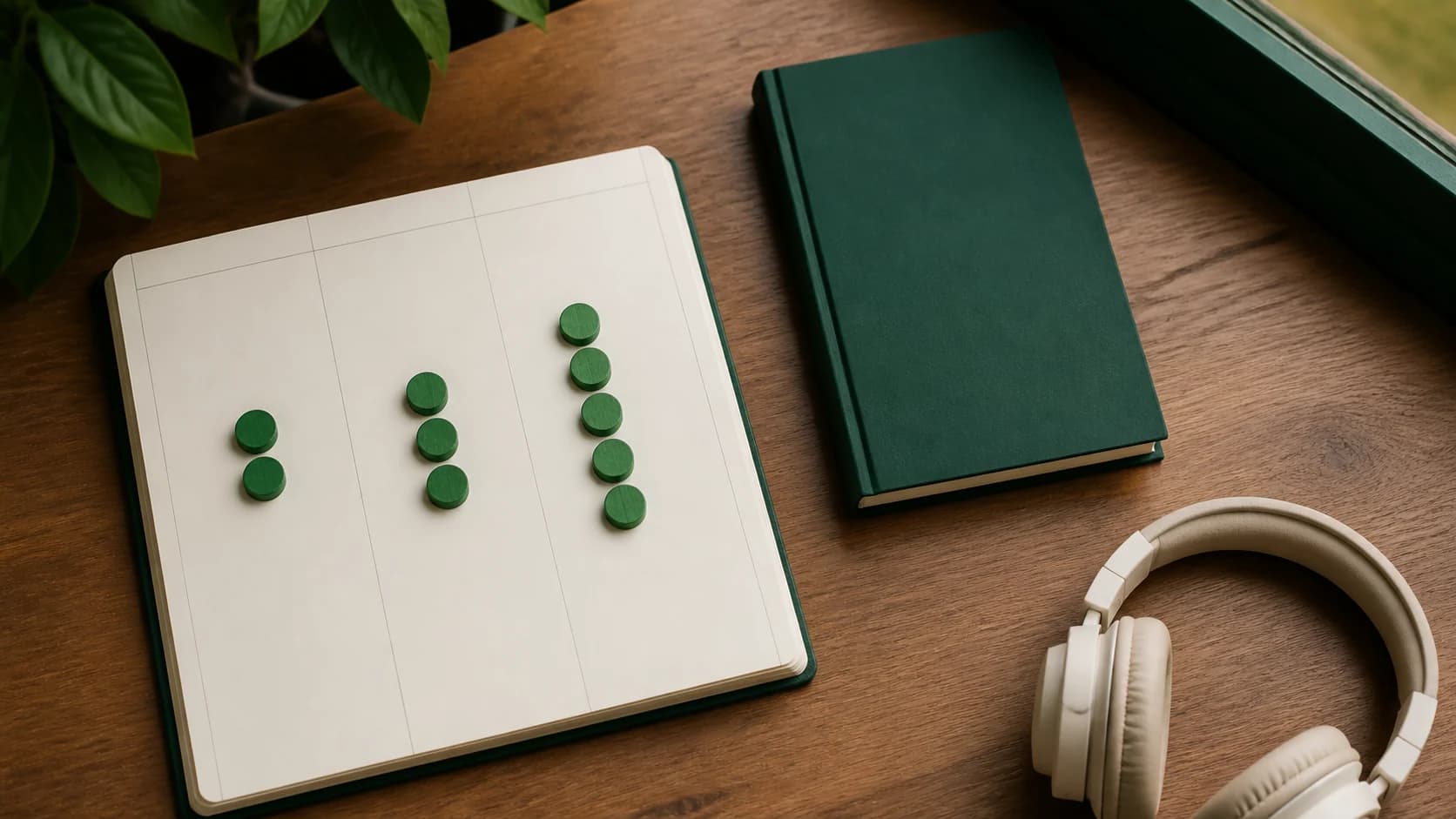
There is no universally correct number of Quran classes per week. The useful answer depends on what the student is learning, how much they practise between lessons and whether the schedule can survive ordinary life. Frequency helps only while the learner arrives ready enough to benefit.
Two lessons a week: the sustainable foundation
Two weekly classes work well for busy beginners, children with several existing commitments and adults returning after a long gap. The teacher can correct the learner often enough to stop practice drifting too far, while the week still has breathing room.
This pace needs short practice between lessons. Without it, each class may be spent rebuilding what was covered last time. Ten focused minutes on several days is more useful than a long session immediately before the next call.
Three lessons a week: more continuity
Three sessions shorten the gap between correction and the next attempt. It often suits learners working through the Noorani Qaida, improving reading fluency or trying to replace a persistent habit.
The extra class should not remove independent practice. A teacher guides and corrects; the learner still needs quiet repetition. Three classes are valuable when they create continuity, not when they simply fill the calendar.
Five lessons a week: useful for focused goals
Five short lessons can suit Hifz students, school-holiday intensives and learners with a clear target plus daily time. Frequent listening makes it easier for a teacher to adjust the next task before a problem grows.
It is also the easiest plan to overbook. Check sleep, school workload and family logistics honestly. If the student attends five times but has no energy to prepare, a three-lesson plan may move faster in practice.
Lesson length and attention matter too
Frequency cannot be judged without lesson length and learner age. A focused half hour of one-to-one reading asks more from a child than half an hour inside a group where they wait for several turns.
Young beginners may learn more from short, regular contact. Adults can sometimes handle longer sessions but need time afterwards to practise. Compare actual minutes of reading and correction, not only the number written on the plan.
Review the plan after four weeks
Look at attendance, energy, practice and what the student can now do. If progress is steady and the routine feels manageable, keep it. If every class is rushed, adjust the time or frequency before blaming motivation.
Our pricing page shows the two, three and five lesson plans together so you can compare the full monthly commitment.
Questions to ask before increasing frequency
What skill needs the extra contact?
Name the reason for adding a class. It may be faster correction during Qaida, closer supervision for memorisation or a short holiday goal. More is easier to evaluate when it has a purpose.
Where will independent practice fit?
If an additional lesson takes the only available practice window, it may not help. Live teaching and independent repetition do different jobs and both need a place in the week.
What will make you reduce the schedule?
Agree on warning signs such as repeated lateness, tiredness, missed homework or rising frustration. Reducing frequency is an adjustment, not a failure. A plan should respond to evidence.
A simple next step
Choose a routine small enough to keep, then watch one real lesson before committing. Our free trial class lets the student meet a teacher, receive a short assessment and decide afterwards. No card details are required.
Learn the Quran with a teacher by your side
Live one-to-one classes for children and adults. Your first class is free.
Book a free trial class