
For reverts & new Muslims
Quran Classes for Reverts — Begin Wherever You Are
Private one-to-one lessons for new Muslims, starting with what you need for salah and building from there. No Arabic assumed, no test, and your first class is free.
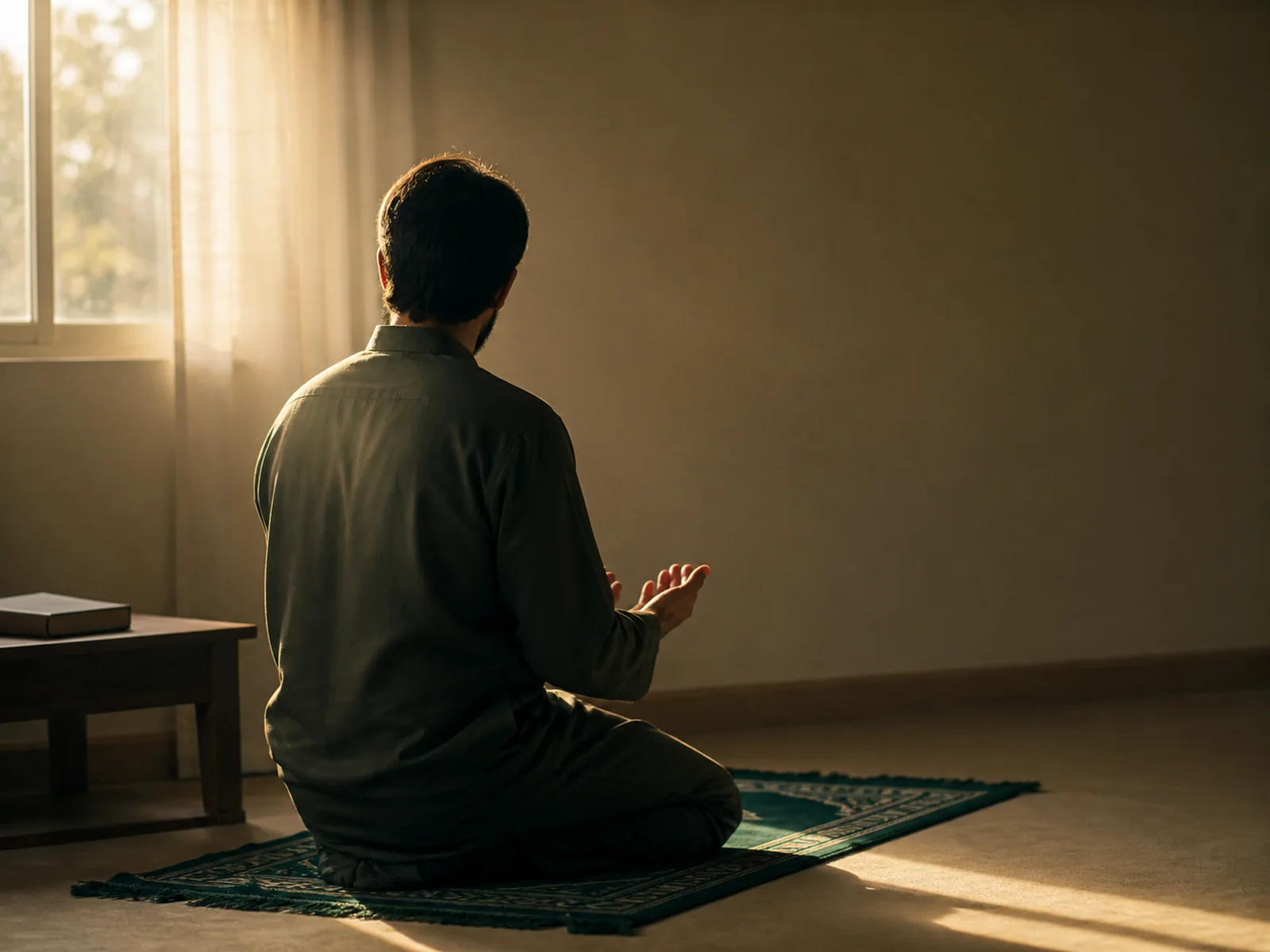
Quran classes built around new Muslims
If you have been searching for Quran classes for reverts, this is the page you were looking for. You can begin at the very first Arabic letter, or at the first line of a prayer. Teachers here start with new Muslims every week.
Nothing here assumes a background: not that you speak Arabic, not that someone at home can teach you, not that you have anyone to ask when a question feels too small for the masjid. Bring the question — your teacher answers it properly, then answers it again next week if you need that.
Every lesson is private and one to one, with no group and no audience. Our Quran classes for beginners page maps the whole route, from the alphabet through to fluent reading.
Built around new Muslims
What makes these classes different
Salah comes first
Your early weeks go on the passages used in salah, the daily prayer.
Nobody hears you struggle
One student, one teacher, nothing recorded. Get a letter wrong thirty times; one person knows.
No Arabic taken for granted
Every letter taught from zero, every Arabic word explained the first time it appears.
Female teachers for sisters
Revert sisters can request a qualified female teacher at signup. No extra cost, no reason needed.
No syllabus speed
No term dates and no class to keep up with. You move on when you are ready.
Ask the basic question
How is this letter made? What am I saying here? Small questions are the lesson.
What to learn first — and in what order
Almost every new Muslim wants the same thing first: to pray without a phone propped open in front of them. This is the order our teachers use most often.
- Surah Al-Fatihah — the opening chapter of the Quran, recited in every unit of salah. Learnt by ear, a line at a time.
- A short surah to follow it — a surah is a chapter of the Quran. Al-Ikhlas, Al-Kawthar and An-Nasr are usable within a few lessons.
- The words said while bowing and prostrating — brief, repeated phrases, quick once Al-Fatihah is comfortable.
- The sitting portion, at-Tahiyyat — longer, so most people take it in pieces.
- More short surahs from Juz Amma — the last section of the Mushaf, the printed Quran, where the short chapters sit.
- The Arabic letters — now for reading rather than repeating, with the Noorani Qaida: their sounds, and how they change shape when they join.
Steps one to five are learnt by listening and repeating, so you can pray with confidence long before you can read a word. Step six is where reading actually begins.
Fluent reading from the page is Nazra Quran reading; the finer rules of pronunciation come later in a Tajweed course. Matters of ruling rather than recitation — what wudu, the washing before prayer, involves — belong with a scholar or your local imam, and a good teacher will say so rather than guess.
A realistic first stretch
What your first three months can look like
Not a promise and not a timetable — just the shape lessons often take at two or three classes a week.
- 1
The opening weeks — Al-Fatihah
Learnt in short pieces, repeating after your teacher and practising between classes until the whole chapter runs unbroken.
- 2
Next — your first short surahs
Two or three of the shortest chapters, so your prayer no longer leans on the same lines.
- 3
Then — the rest of the prayer
The phrases said while bowing and sitting, plus an unhurried start on the Arabic letters.
- 4
By month three — reading, not repeating
Letters begin joining into words, and you recognise on the page what you have been saying aloud.
“Everyone already knows this except me”
It is worth saying out loud, because hardly anyone says it first: standing in a room where everybody seems to have known this since they were six is uncomfortable. Half-remembering a line, copying the person beside you, hoping nobody asks you to lead.
Two honest things. A great many people raised in Muslim families cannot read Arabic either — they recite from memory and quietly wish they could do more, which is nearer to where you are than it looks. And nobody at the masjid can see inside a private lesson.
Your teacher will not be startled by anything you cannot do yet, and will not perform patience at you either. Revert sisters who would rather learn from a woman can ask for a qualified female Quran teacher at any point.


What actually happens in the first class
You open a link at the time you booked and your teacher is there. Nothing to prepare, nothing to bring.
Your teacher asks what brought you here and what you can already say. If the honest answer is the shahadah — the declaration of faith — and little else, the lesson starts there. Most first classes go on a few lines of Al-Fatihah: your teacher recites, you repeat, the sound is corrected, you repeat again.
The camera is optional: plenty of students share only the page, because this runs on sound rather than sight. Nothing is recorded.
That first class is completely free, with no card taken. Our plans and pricing are simple monthly subscriptions if you continue, and adult reverts usually settle into our Quran classes for adults.
Where reverts usually go from here
Not sure which is yours? Book a trial and decide it with the teacher.
Learn the Arabic letters
The Noorani Qaida, from a single letter through to joined words.
Noorani Qaida courseReading from the Mushaf
Once the letters are steady, Nazra takes you page by page until decoding turns into reading.
Nazra Quran readingFor revert sisters
A qualified female teacher, a private room, and a camera you are never asked to switch on.
Female Quran teachersRead the whole path first
A plain guide to the order things are learnt in, start to finish.
How to start learning the QuranYour lesson stays between you and your teacher
Nothing in a class is recorded, shared or shown to anyone. What you can and cannot do yet stays between you and one teacher — which, for many reverts, is the whole reason online lessons work.
Questions reverts ask before booking
Straight answers, without assuming you already know how any of this works.
I became Muslim recently and know almost nothing. Is that a problem?
Not in the slightest. Teachers here begin with new Muslims regularly. The first class finds out what you can already say; it is not a test.
What should I learn first as a revert?
Most people start with Surah Al-Fatihah, the opening chapter recited in every unit of salah, then add two or three short chapters. The Arabic letters come after that.
Do I need to speak any Arabic to begin?
None, and none is assumed later either. Every letter is taught from the beginning and every Arabic word explained the first time it is used.
Can I learn to pray before I can read Arabic?
Yes, and that is the usual order. The salah passages are taught by ear, so you can pray confidently months before you can read them.
Can I have a female teacher?
Yes, and many revert sisters prefer one. Mention it in your signup notes, or later, and a qualified female teacher is arranged. Same price, no reason needed.
How fast am I expected to progress?
There is no set pace and no syllabus to keep up with. Your teacher stays on a passage until it is solid, and nobody is measured against anyone else.
Can I keep my camera off?
Yes. Lessons run on sound rather than sight, so many students share only the page and leave their video off from the first class.
Continue your learning
Explore these lessons and guides for your next step.
- Short Surahs to Learn First: A Beginner's Order and Method
A suggested order of short surahs for beginners and new Muslims, from Al-Fatihah to At-Tin, with a listen-and-repeat method and how a teacher checks sounds.
Where we teach
Live one-to-one lessons, scheduled around your local timetable.
Who we teach
Every plan is built around the student's age, level and goal.
Your first class is free — start with Al-Fatihah
Book a trial with a qualified teacher, say plainly where you are, and spend half an hour on the words you say every day. No card details, no commitment.