
Online Quran classes in America
Online Quran Classes in the USA — Live and One-to-One
Private Quran lessons for children and adults across the United States — booked in your own time zone, taught after school or at the weekend, and billed in US dollars. Your first class is free.

A qualified Quran teacher, at your kitchen table
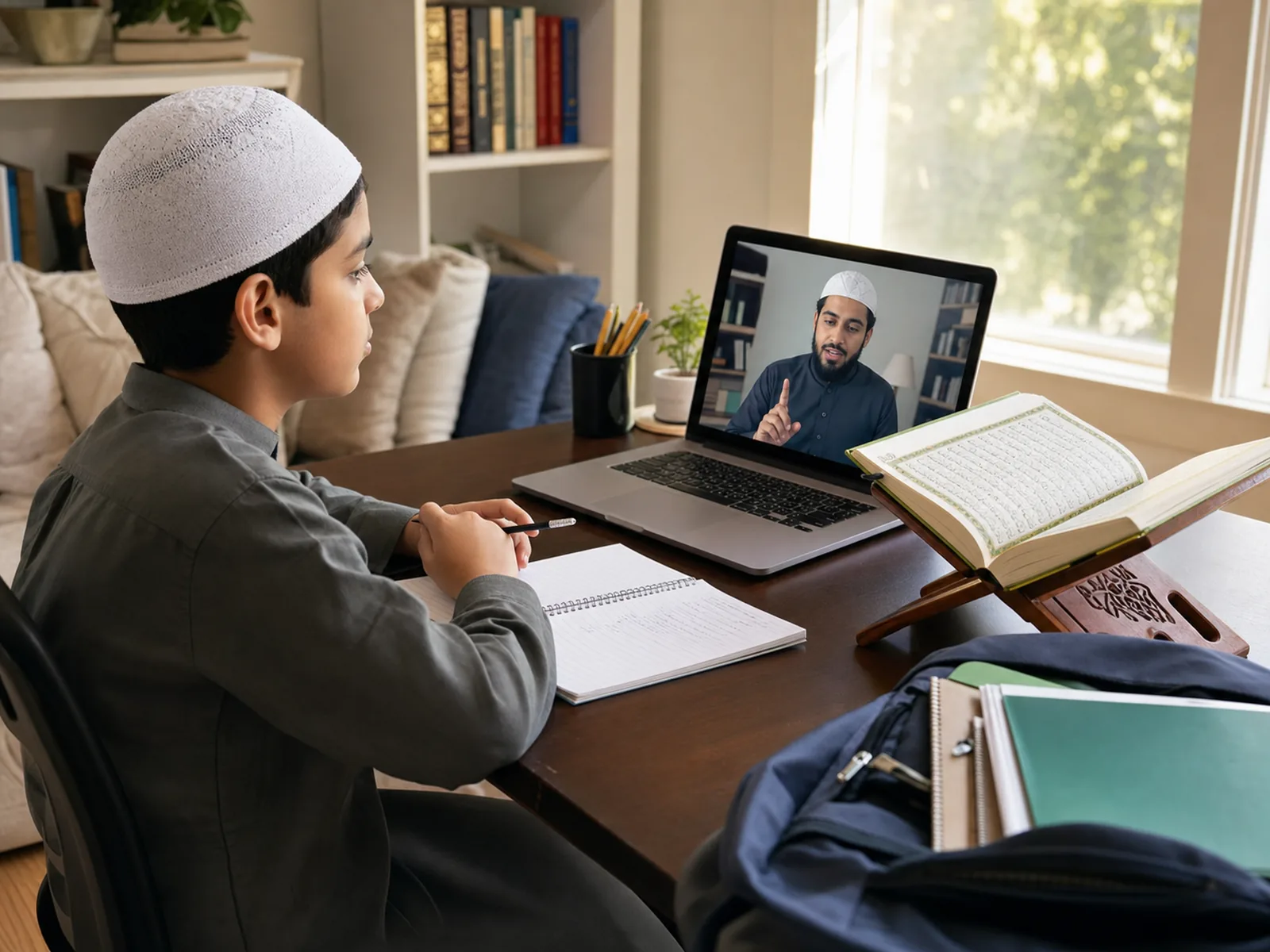
Online Quran classes in the USA let your child — or you — sit down with a qualified Quran teacher over live video, one-to-one, at a time that actually fits an American weekday. Lessons run from home on any laptop, tablet or phone, most often in the 4pm to 8pm window after school, and you can take a free trial class before paying anything.
We teach students in every US time zone, from New York and New Jersey to Chicago, Houston, Dallas, Atlanta, Dearborn, Minneapolis, Los Angeles and the Bay Area. Some families come to us because the nearest masjid programme is a half-hour drive each way. Others come because their child is one of twenty-five children in a weekend class and rarely gets heard recite. Either way, the answer is the same: a private teacher, a fixed weekly slot, and progress you can actually hear.
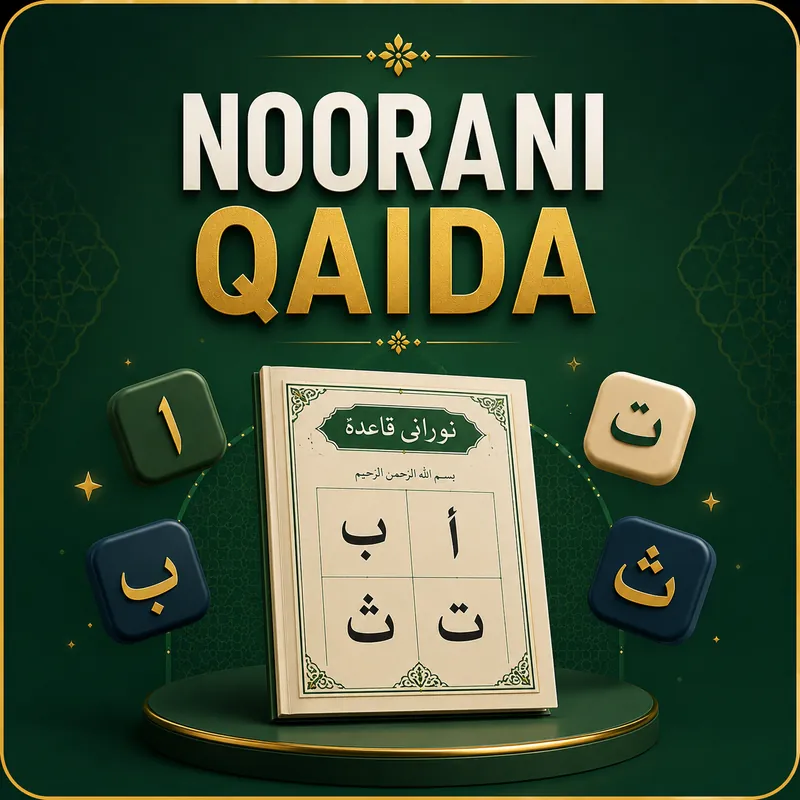
Complete beginners usually start with the Noorani Qaida, then move into Tajweed or the Hifz programme. You can see everything we teach on our courses page.
EST–PST
Every US time zone covered
4–8pm
Peak after-school class slots
$35
Where monthly plans start, in USD
Free
First trial class, no card
Why families across the USA choose it
Built around how American families actually live
Fits the American school day
Most US schools let out between 3pm and 3:30pm. Our busiest slots are 4pm to 8pm local time — after the bus, around homework and dinner, before bed.
Every US time zone, every weekday
Eastern, Central, Mountain or Pacific — you book your slot in your own local clock and your teacher holds it week after week.
Not a class of twenty-five
Your child recites for the whole lesson instead of waiting a turn, so mistakes get corrected the moment they happen rather than next Sunday.
No weekend drive across town
Class happens at your kitchen table. No car pool, no parking at the masjid, no losing a whole Saturday morning to an hour of teaching.
Flexes with the US school calendar
Move classes around spring break, finals week and summer vacation. Many families add extra sessions over the summer and dial back in the fall.
Parents welcome in every class
Sit beside your child or watch from across the room. Every teacher is screened for recitation, Tajweed and teaching ability before meeting a student.
Class times that work in every US time zone
This is the question American parents ask first: if the teacher is not in the United States, who is awake at 6pm in California? Our teachers work shifts built around American evenings rather than their own, so the same after-school window is staffed on Eastern, Central, Mountain and Pacific time — roughly seven hours of live teaching every weekday, plus mornings and afternoons for homeschooling families and adults working nights.
You choose your slot in your own local clock, and it stays yours. Here is what a typical Tuesday and Thursday looks like for four families:
- Brooklyn, New York (Eastern) — 5:00pm, straight after homework and finished well before Maghrib in winter.
- Chicago, Illinois (Central) — 6:30pm, after dinner, while the younger ones are being put to bed.
- Denver, Colorado (Mountain) — 4:30pm, as soon as the school bus drops off.
- Fremont, California (Pacific) — 7:00pm, taught by a teacher whose shift begins as the East Coast is finishing, so a Bay Area family gets a fresh teacher rather than the last lesson of a long day.
Weekends are deliberately busy. Plenty of families keep a Saturday or Sunday slot for a longer Tajweed or Hifz session when nobody is watching the clock. When the clocks change for daylight saving, tell your teacher and we move your slot with you instead of leaving you an hour adrift. Classes flex around the US school calendar too — spring break, finals week, Ramadan and the long summer vacation, when many students step up to five classes a week and make real headway before school starts again.
If you want to see the whole process end to end, read how our classes work, or meet the people who teach them on our teachers page. Common questions are answered on our FAQ page.
Courses
Courses American students start with





How this compares to weekend Islamic school
Nearly every American Muslim family we speak to is weighing this against the weekend school at their local masjid — and we would never tell you to drop it. Sunday school gives children something we cannot: friends who are learning alongside them, a teacher in the room, and a real link to the community. If your child loves it, keep it.
What it usually cannot give is time. One session a week, twenty or thirty children to a teacher, and often only a couple of minutes of individual recitation each. Add twenty-five minutes of driving in each direction across Houston or metro Detroit, and a family can spend most of a Sunday for a few minutes of correction.
Daily one-to-one is the opposite trade: thirty minutes, up to five days a week, every second of it on your own child's recitation, with no car involved. Many families do both — masjid at the weekend for the community, short evening Quran classes for kids during the week for the actual reading. Just tell your teacher which Qaida or Juz the weekend school is working through and they will follow it, so the two reinforce each other instead of pulling in different directions.
Getting started
How to start Quran classes from the USA
It takes about a minute to book, and nothing is charged until after your free trial class.
- 1
Tell us your time zone
Sign up and say whether you are on Eastern, Central, Mountain or Pacific time, and which evenings or weekend times suit your family.
- 2
Take a free trial class
Meet a teacher, watch how they correct recitation, and see whether your child warms to them. No card is needed to book it.
- 3
Choose a plan in dollars
Pick two, three or five classes a week. Billing is monthly in USD, and you can change or cancel it anytime.
- 4
Keep your weekly slot
Your teacher holds the same times each week and sends a monthly progress report, so you always know exactly where your child stands.
Choose the right class for your family
Whether it is a first grader learning the letters or a parent finally starting themselves, there is a course for it.
Quran classes for kids
Short, lively evening lessons for children from around four, with teachers used to holding a child's attention at the end of a long school day.
Quran for kidsAdults, parents and reverts
Begin at the very first letter without embarrassment, in a private class nobody else can see — early mornings, lunch breaks or after the kids are asleep.
Quran for adultsSisters and mothers
Qualified female teachers for sisters, and for parents who would prefer a female teacher for their daughter, in a private one-to-one setting.
Quran for sistersQuran classes in New York
Teachers work across Eastern, Central, Mountain and Pacific time, so your state decides the slot rather than which teacher you get. The practical questions do differ by city, though — how late an evening class can start, and whether a weekend-heavy schedule works better than a weekday one.
For families in and around New York City we have set that out in full on the online Quran classes in New York page. Anywhere else in the country, this page covers it.
What online Quran classes cost in the USA
We bill in US dollars, so there is no currency conversion and no odd figure on your card statement. Plans are simple monthly subscriptions based on how many classes a week you want:
- $35 a month — two classes a week. A steady pace for a young child starting the Qaida, or an adult fitting the Quran around work.
- $50 a month — three classes a week. Enough repetition that a school-age child's reading genuinely sticks between lessons.
- $80 a month — five classes a week, Monday to Friday. The pace serious Hifz students need, and what many families switch to over summer break.
Every plan is one-to-one, never a group. There is no registration fee, no textbook to buy and no long contract — cancel anytime from your dashboard. Sisters and parents of daughters can ask for a female Quran teacher at no extra cost. Full details are on our pricing page, and your first class is free, with no card required to book it.
Questions from families in the USA
The things American parents usually want to know before booking a first class.
What times are your online Quran classes available in the USA?
Every day, across all four mainland time zones. The busiest window is 4pm to 8pm local time, right after school, and we keep slots open on Eastern, Central, Mountain and Pacific. Early mornings before school and weekend daytimes are available too, which suits homeschooling families and adults on shift work.
Do you have teachers awake for a 7pm class on the West Coast?
Yes. Our teachers work shifts built around American evenings rather than their own, so a 7pm Pacific slot falls in the middle of that teacher's working hours — not at the tail end of a long day. A family in California gets the same energy a family in New York gets at 5pm Eastern.
Can online classes replace weekend Islamic school?
They can, and for many families they do — but the two are not the same. Weekend school gives your child friends, a teacher in the room and a link to the masjid community. Our classes give daily one-to-one time on their own recitation with no drive. Plenty of families keep both and ask their teacher to follow the same Qaida or Juz the weekend school is working through.
How old does my child need to be to start?
Most children begin between four and six, around the point they can sit and focus for twenty to thirty minutes. Younger children do shorter classes more often. Teachers who work with American children deliberately keep lessons short and lively, because the class lands at the end of an already long school day.
Do you charge in US dollars?
Yes. Plans are billed monthly in USD — $35 for two classes a week, $50 for three, and $80 for five. There is no registration fee and no long-term contract, and you can change or cancel your plan anytime from your dashboard.
Is the trial class really free, and do I need a card?
It is genuinely free and no card is required. You book a time, meet the teacher and watch the whole class if you want to. Nothing is charged unless you decide to continue and pick a plan afterwards.
Can I sit in on my child's class?
Always, and you are encouraged to. Every class is private video between one teacher and one student, so parents are welcome to sit beside their child or watch from across the room. Teachers are screened for recitation, Tajweed knowledge and teaching ability before they ever meet a student, and you receive a monthly progress report.
What happens during summer break and school holidays?
You can change your schedule as often as you need. Some families pause for a week of vacation; many move classes to the morning over summer break, or step up to five a week to make real progress before school starts again. Spring break, finals week and Ramadan timings are handled the same way — just tell your teacher.
Where we teach
Live one-to-one lessons, scheduled around your local timetable.
Who we teach
Every plan is built around the student's age, level and goal.
Book a free trial class this week
Pick a time that works in your time zone, meet a qualified teacher, and see how a private class feels before you pay anything. No card required, cancel anytime.