
Quran classes across Australia
Online Quran Classes in Australia — Live, One-to-One
Private video lessons with a qualified teacher, booked on your own clock — Sydney to Perth, and the towns in between. First lesson free.
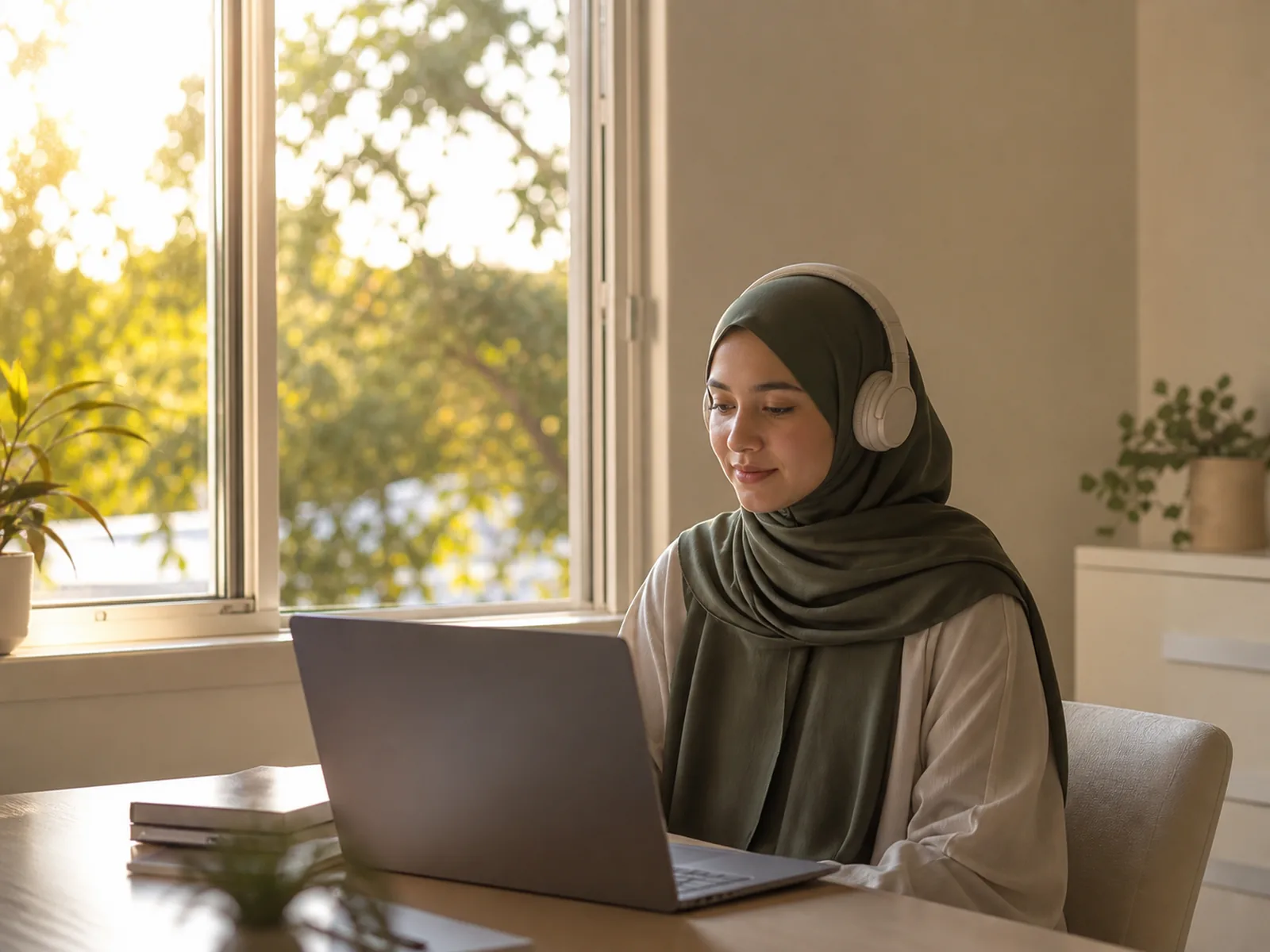
A teacher in the hour between school and dinner
Online Quran classes in Australia only work if the lesson lands between school pick-up and dinner — the window our teachers are rostered to cover. Each one is live one-to-one video: one teacher, one student, the mushaf on screen, recitation corrected as it happens. You book on your own clock, whether that reads AEST, ACST or AWST.
Households join us from Lakemba, Auburn and Bankstown in Sydney, from Broadmeadows and Dandenong in Melbourne, and from Brisbane, Adelaide, Canberra and Perth — and just as often from regional towns where the nearest Islamic school is an hour of highway away.
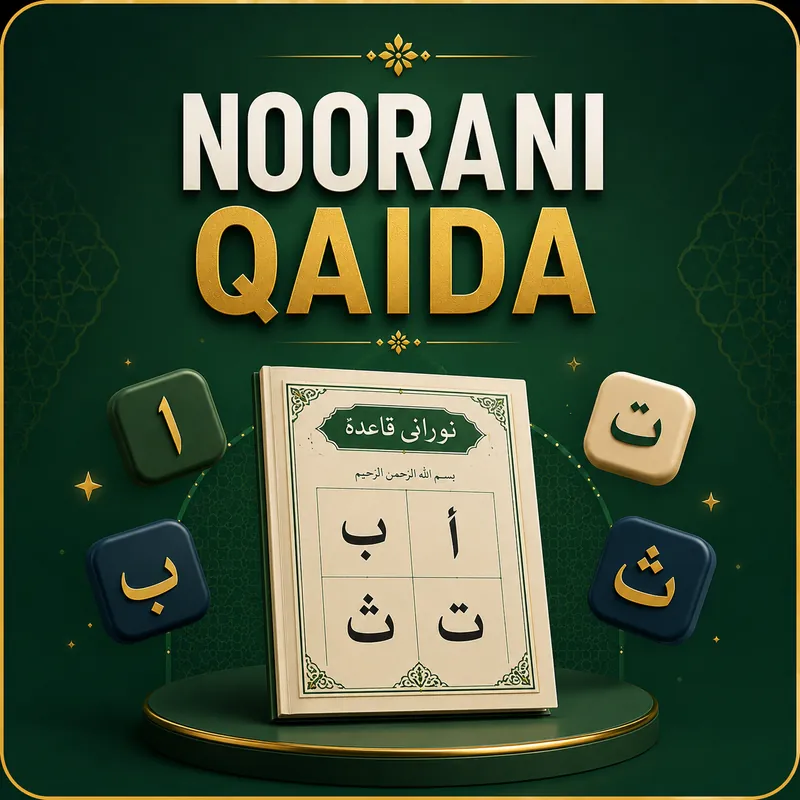
Beginners start on the Noorani Qaida; younger children usually begin with Quran classes for kids. Everything we teach sits on the courses page.
Why Australian households choose it
Shaped around the Australian week
Afternoon slots from 3:30pm
Schools finish around three. Our busiest block runs 3:30pm to 8:30pm on your own local clock.
Booked in AEST, ACST or AWST
Adelaide's half-hour offset and Perth's two-hour gap are ours to solve, not yours.
Daylight saving does not move you
Five states and territories change their clocks, three do not. Your slot is anchored to your city.
Follows the four-term year
Ease off during Term 4 assessments, then lift the pace across the long December holidays.
A parent can always sit in
Private video, one teacher and one student, and every teacher is screened before meeting anybody.
English, Urdu or Arabic
Most students schooled here learn in English. Ask at sign-up if you would prefer Urdu.
Will a teacher be awake at 5pm in Sydney?
This matters more here than anywhere else we teach, so here is the arithmetic. Our teachers live overseas, mostly in South Asia and the Middle East, and Australia runs hours ahead of both. That sounds like an obstacle. It is the reason your after-school window is the easiest one we staff.
Take a Tuesday lesson at 5:00pm in Sydney. On AEST that is midday in Lahore or Karachi — the middle of a teacher's day, not the ragged end of it. When New South Wales shifts to AEDT for summer, the same slot becomes 11:00am there, and around nine in the morning for a teacher in Cairo. So we roster early-morning and late-evening shifts, and never ask anyone to teach through the night.
- Sydney, Melbourne, Canberra, Hobart — 4:00pm to 8:00pm is our busiest block, staffed every weekday.
- Brisbane — level with Sydney in winter, an hour behind from October to April, because Queensland leaves its clocks alone.
- Adelaide and Darwin — ACST sits half an hour behind the east coast, which quietly makes 5:30pm and 6:30pm easy to fill.
- Perth — two hours behind Sydney for half the year and three hours behind once the east moves to daylight saving. A 5:00pm Perth lesson is early afternoon for the teacher.
Daylight saving is where schedules quietly break, so plainly: New South Wales, Victoria, South Australia, Tasmania and the ACT observe it; Queensland, Western Australia and the Northern Territory do not. Your slot is stored against your city, not a fixed offset, so nobody in Brisbane, Perth or Darwin notices a change. Weekend mornings are open too. See how our classes work, or read about the people teaching them on the teachers page.
3:30–8:30pm
Afternoon and evening slots
AEST–AWST
Every Australian time zone covered
$35 USD
Plans start here, about AUD $54
Free
Your first lesson, card not needed
Courses
Where Australian students usually begin

When the nearest Islamic school is a highway away
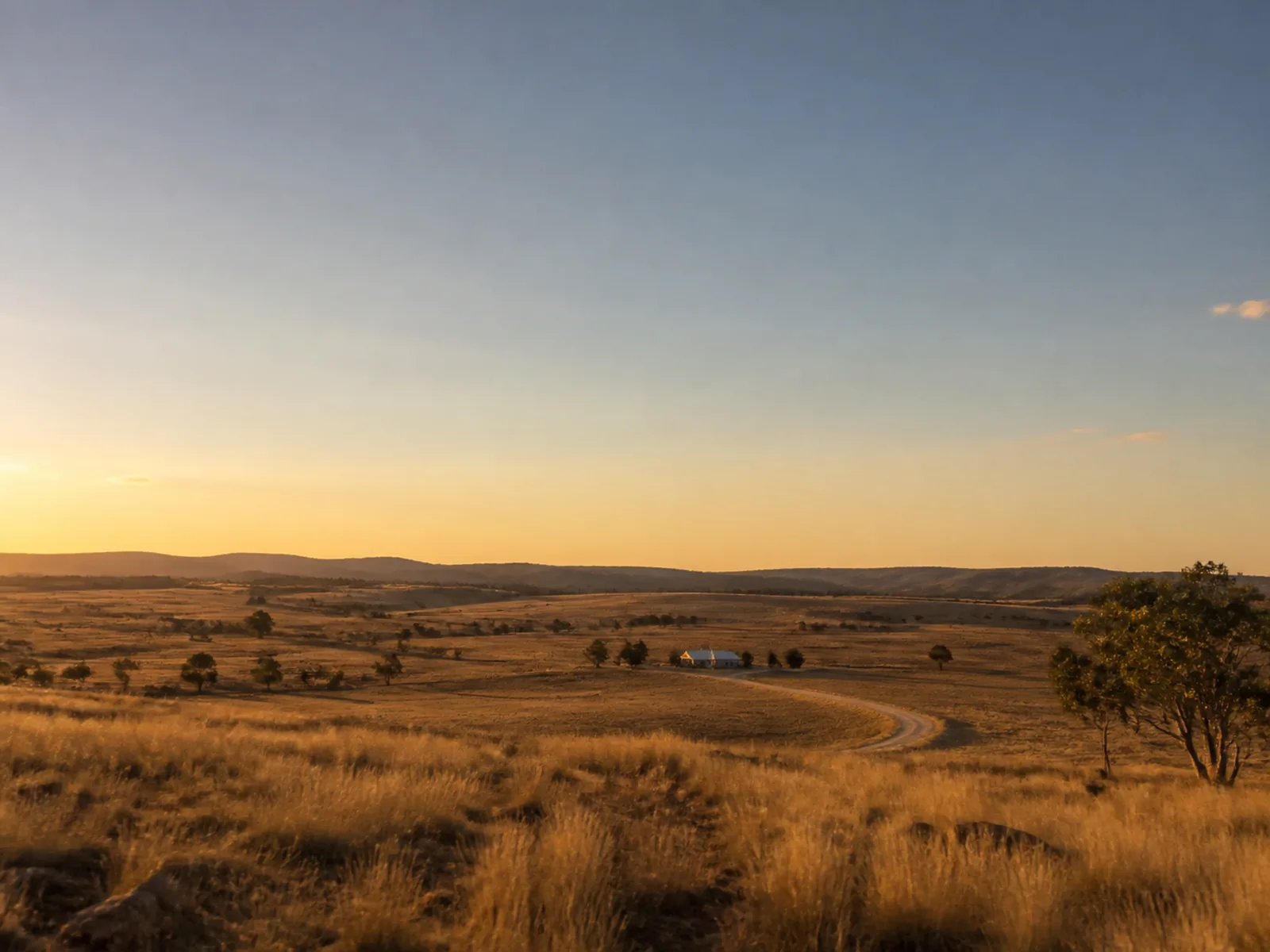
Australia is enormous and the community sits in a handful of suburbs. Minutes from a masjid in Lakemba or Broadmeadows, a weekly programme is easy. In a regional town, an outer growth suburb or a mining community out west, there may be no Quran teacher within a hundred kilometres.
Distance is the one barrier online teaching removes outright. A tablet, a quiet corner and a workable connection, and a student in a country town gets the same thirty minutes as one across the road from the mosque.
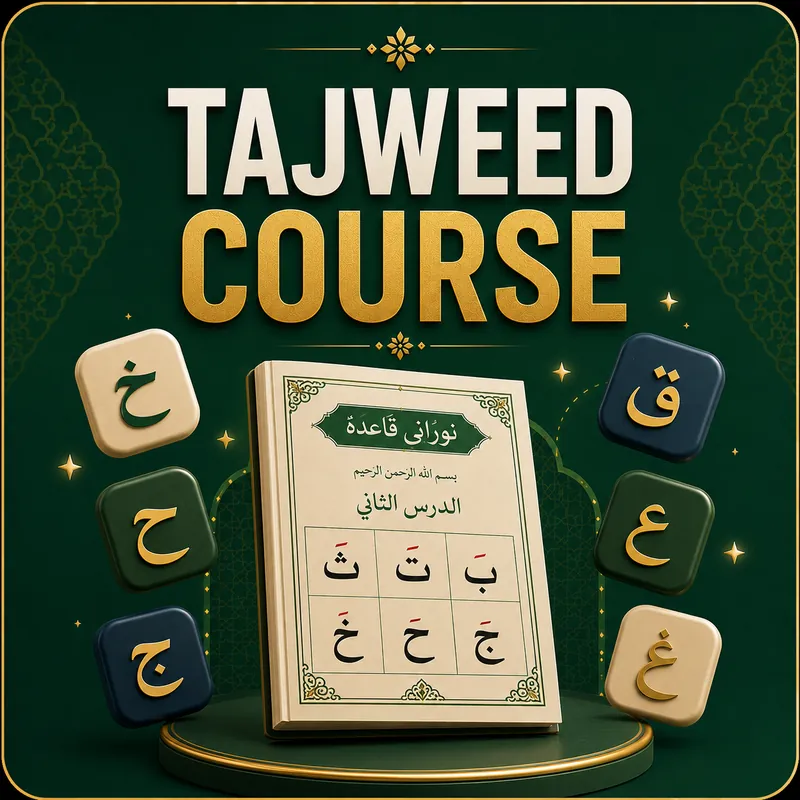
It also means the teacher is matched to the student rather than to a postcode — a patient Tajweed teacher, or someone ready to start a child memorising the Quran properly.
Getting started
Starting Quran classes from Australia
Four short steps, and nothing is charged until you have met the teacher.
- 1
Give us your city
Name your city, not a time zone — Perth, Toowoomba, Dandenong. We work out the offset and the daylight saving rules.
- 2
Pick your afternoons
Say which days suit and roughly what level the student is at. Most families settle on two or three weekday afternoons.
- 3
Meet the teacher, free
The trial costs nothing and needs no card. Watch all of it, then say whether that teacher suits your child.
- 4
Settle into the slot
Same teacher, same hour each week, with regular progress updates so you hear the reading improve.
Find the right class for your household
From a prep-aged child meeting the alphabet to a parent quietly starting again.
Children and teenagers
Thirty-minute lessons for primary and high school age, with teachers used to holding a child who has already had a full day.
Quran classes for kidsWorking adults
Early mornings, a lunch break, or once the children are down. Nobody else is listening, so starting at the first letter costs nothing.
Quran classes for adultsSisters and mothers
Qualified female teachers, including daytime hours while the children are at school, and for daughters whose parents prefer a woman teaching them.
Quran classes for sistersQuran classes in Sydney
Teachers cover AEST, ACST and AWST, so wherever you are in Australia the after-school hours are the ones that matter, not the distance. Where you live still changes the practicalities: how spread out your city is, and how long the drive to a weekend class would take.
For Sydney families, and particularly across the western suburbs, we have written that up on the online Quran classes in Sydney page. For the rest of the country, everything on this page applies as written.
What it costs, and why the AUD figure moves
Three monthly plans, all one-to-one, all cancellable at any time:
- $35 a month — two lessons a week, around AUD $54.
- $50 a month — three lessons a week, around AUD $77.
- $80 a month — five lessons a week, around AUD $123, the usual choice for Hifz students.
Now the part worth reading twice. Those prices are in US dollars and your card is billed in US dollars. Your bank converts it, so the Australian figure on your statement drifts with the exchange rate month to month, and some Australian cards add an international transaction fee. Treat the AUD amounts as a guide, not a fixed price.
Nothing else is added: no joining fee, no books, no minimum term. Sisters, and parents who would prefer a woman teaching their daughter, can ask for a female Quran teacher at no extra cost. Plans sit on the pricing page, rescheduling on our FAQ page, and your trial lesson is free.
Questions from Australian families
What parents around the country ask before booking a first lesson.
Will a teacher actually be awake for a 5pm class in Sydney?
Comfortably, yes. A 5pm Sydney lesson is around midday in Pakistan on AEST, 11am once the state moves to AEDT, and about nine in the morning in Egypt — mid-shift, not the end of one.
Do you have teachers available on Perth time?
Yes, and Perth has the widest choice in the country. AWST runs two hours behind Sydney for half the year and three behind through the eastern summer, so a 5pm lesson is early afternoon for the teacher.
What happens to my slot when daylight saving starts or ends?
Nothing you need to do. Bookings are stored against your city rather than a fixed offset, so the local hour stays put. Queensland, Western Australia and the Northern Territory never change at all.
We are in a regional town with no madrasah. Can you help?
That is one of the main reasons families come to us. With a tablet and a workable connection, a student in a country town gets the same teacher and the same thirty minutes as one in Auburn.
What times are classes available in Melbourne and Brisbane?
Weekday afternoons from about 3:30pm to 8:30pm, plus weekend mornings. Melbourne moves to AEDT over summer while Brisbane stays on AEST, so the two sit an hour apart from October to April.
Am I charged in Australian dollars?
No, billing is in US dollars: $35, $50 and $80 a month, roughly AUD $54, $77 and $123 depending on the rate. Your bank converts it, so the AUD figure varies slightly each month.
Can we change the schedule around school terms and holidays?
As often as you need. Many families ease off during Term 4 assessments, then step up to five lessons a week across the long December and January break.
Are female teachers available for sisters and daughters?
Of course, at no extra cost, from the trial lesson onwards. Every class is private video and parents are welcome to sit in on any of them.
Where we teach
Live one-to-one lessons, scheduled around your local timetable.
Who we teach
Every plan is built around the student's age, level and goal.
Try a free lesson on Australian time
Choose an afternoon that suits your household, meet a qualified teacher, and judge it for yourself before any money changes hands.