
Learning guide
A clear route from first lesson to steady reading
Learning the Quran is easier when the next step is clear. A complete beginner normally needs to recognise the Arabic letters, learn how they join, practise the short vowels, and then build fluency line by line. Someone returning after a long break may begin further along that path, but still benefit from checking weak foundations first.
Use these guides to understand the choices before you begin: what to learn first, how online lessons compare with in-person teaching, and how to build a routine you can maintain. A teacher can then assess your reading directly and shape the sequence around what you can already do.
A practical learning path
- 01
Find your real starting point
Check whether you need the alphabet, Qaida practice, reading fluency or Tajweed correction. Starting at the right level prevents both gaps and unnecessary repetition.
Read the guide → - 02
Choose a lesson format
Compare access to a suitable teacher, immediate correction, travel, scheduling and the learner's ability to concentrate—not convenience alone.
Read the guide → - 03
Protect a small regular time
A realistic routine that survives busy weeks is more useful than an ambitious plan that quickly stops. Use lesson feedback to decide what to practise between classes.
Articles
Read about learning the quran

How to Improve Quran Recitation: A Practical Plan
Practice improves recitation only when it is aimed at something. Record a baseline, fix accuracy before speed and repeat a four-week cycle with a teacher's ear.
Sep 5, 2026Read →

A Daily Quran Reading Routine You Can Actually Keep
A routine survives a bad week when it has a small minimum, a fixed cue and a plan for missed days. Worked examples for a parent, a student and a working adult.
Sep 5, 2026Read →

How to Read Quran Fluently Without Stumbling
Fluent reading is recognition, not speed. Why learners stumble, how to read in phrases and reread a page, and when to go back to the Qaida instead.
Sep 5, 2026Read →

How Many Quran Classes Should You Take Each Week?
Compare two, three and five weekly lessons by goal, age, attention, practice time and the pace your household can genuinely maintain.
Sep NaN, 2026Read →

How to Restart After Missing Quran Lessons
A no-guilt plan for assessing what remains, rebuilding a small routine and returning to lessons after illness, travel or a busy season.
Sep NaN, 2026Read →

Quran Classes for Busy Professionals: A Realistic Study Plan
How working adults can choose lesson times, practise in short blocks and keep Quran study steady through deadlines and travel.
Sep NaN, 2026Read →
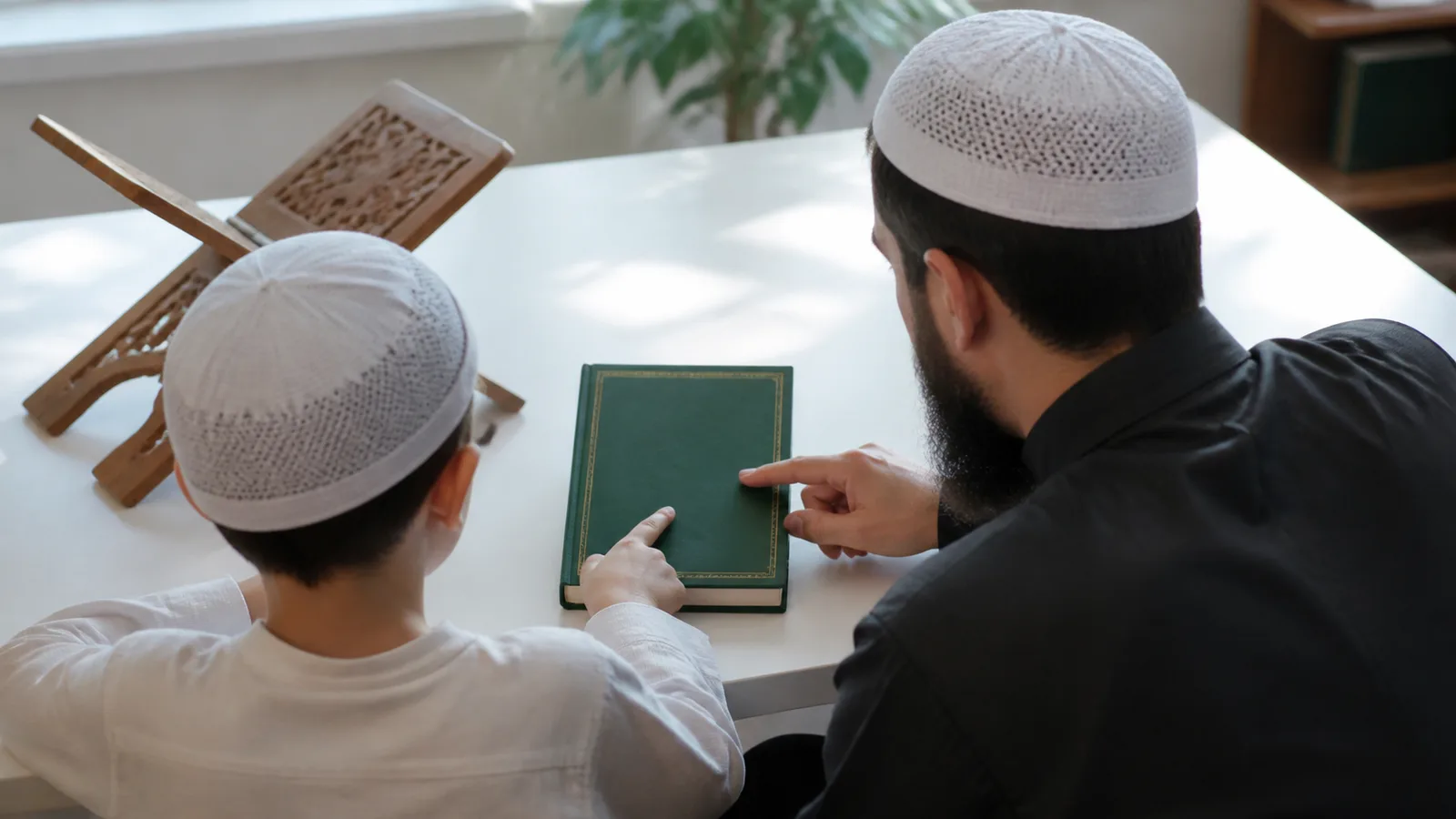
What Is Noorani Qaida and Why Start There?
See how Noorani Qaida builds letter recognition, joining, vowels and reading habits before a learner moves into the Quran.
Aug 21, 2026Read →

The Arabic Alphabet: A Complete Beginner's Guide
A calm introduction to Arabic letters, changing shapes, sounds and the practice habits that turn recognition into fluent reading.
Aug 21, 2026Read →
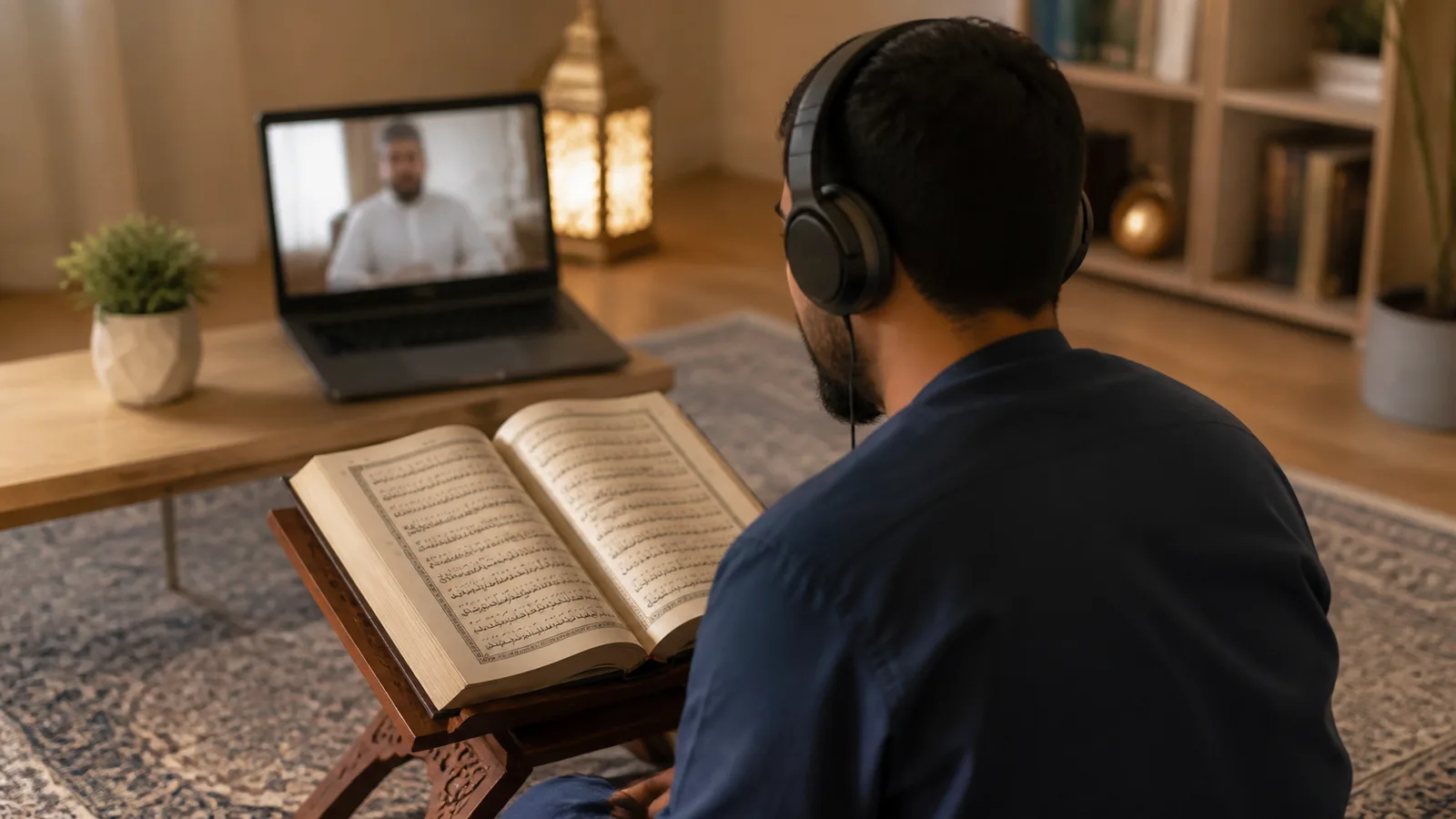
How to Read the Quran Without Knowing Arabic
You can learn accurate Quran reading before conversational Arabic. Here is what to study, what transliteration cannot do, and how to progress.
Aug 21, 2026Read →

From Qaida to Quran: What the Journey Looks Like
A stage-by-stage roadmap from recognising letters to reading connected Quran text with growing accuracy, confidence and independence.
Aug 21, 2026Read →

Learning the Quran as an Adult: It Is Not Too Late
Adult learners bring patience, purpose and self-awareness. Build a realistic routine that works around work, family and a busy mind.
Aug 21, 2026Read →

A Revert's First 90 Days with the Quran
A gentle 90-day roadmap that prioritises prayer essentials, sustainable reading practice and patient one-to-one support without overload.
Aug 21, 2026Read →

How Much Do Online Quran Classes Cost in 2026?
Understand the real cost drivers behind one-to-one Quran tuition and compare plans by teaching time, quality, flexibility and support.
Aug 21, 2026Read →

How to Choose an Online Quran Academy: 10 Checks
A polished website is not enough. Compare teacher quality, lesson design, safeguarding, progress reporting, flexibility and honest trial terms.
Aug 21, 2026Read →
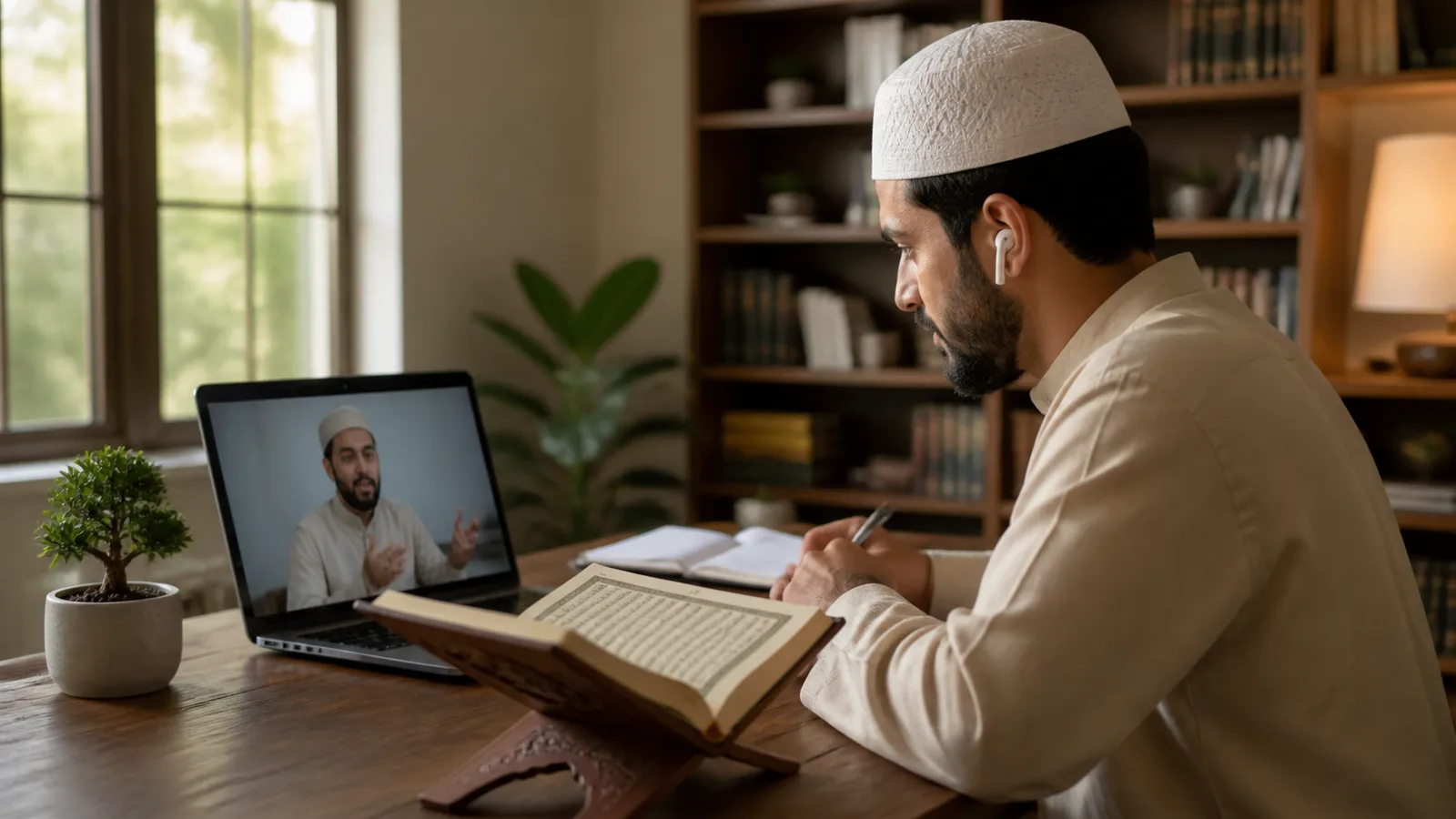
Are Online Quran Classes Actually Effective?
They can be highly effective when live correction, appropriate pacing, focused practice and a reliable learning setup work together.
Aug 21, 2026Read →

What Qualifications Should a Quran Teacher Have?
Credentials matter, but so do accurate recitation, teaching skill, safeguarding, communication and the ability to explain corrections clearly.
Aug 21, 2026Read →

One-to-One vs Group Quran Classes
Private lessons maximise individual correction and pacing; groups add community and lower cost. Compare the trade-offs for your learner.
Aug 21, 2026Read →

What to Expect in Your First Online Quran Class
Your first class should establish your starting point, goals, comfort and next steps—not pressure you to perform or commit immediately.
Aug 21, 2026Read →

Online vs In-Person Quran Classes: Which Is Better?
A candid comparison of one-on-one online classes and traditional in-person lessons — cost, flexibility, quality, and results.
Jul 1, 2026Read →

How to Start Learning the Quran as a Complete Beginner
A step-by-step roadmap — from the Arabic letters and Noorani Qaida to fluent reading — for adults and kids starting from zero.
Jun 2, 2026Read →
Questions learners ask
Do I need to know Arabic before learning to read the Quran?
No. Reading can begin with Arabic letter shapes and sounds. Understanding Arabic is a separate, valuable path that can be added as your reading develops.
Should a complete beginner start with Tajweed rules?
Correct pronunciation should be modelled from the beginning, but a beginner does not need to memorise every rule before learning letters and joining words. The detail can grow with reading ability.
How do I know which course fits my level?
A short reading assessment is the most reliable way to decide. It shows whether the immediate need is Qaida, Nazra reading, Tajweed, memorisation or Arabic study.
Browse other topics
Where we teach
Live one-to-one lessons, scheduled around your local timetable.
Who we teach
Every plan is built around the student's age, level and goal.