
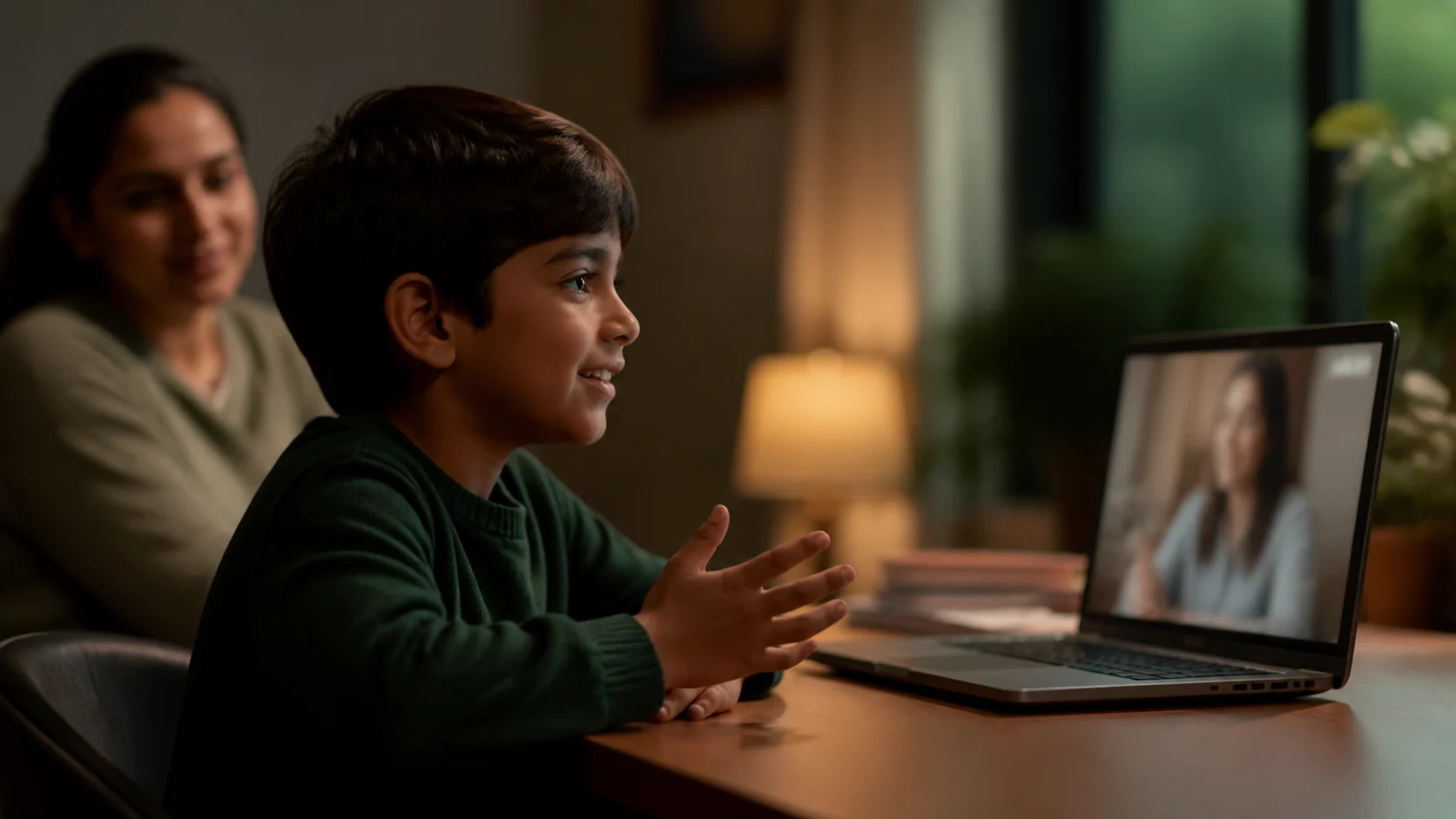
A child who reads quietly or freezes in front of a teacher is not necessarily unprepared or unwilling. Reading aloud combines a difficult skill with the feeling of being watched. Confidence grows when the lesson lowers that pressure without removing the useful challenge.
Separate shyness from lack of knowledge
Ask the child to read in a familiar setting before deciding they do not know the work. Some children read comfortably beside a parent and lose their voice only when another person is listening.
Tell the teacher what you have noticed, but do not answer for the child during the lesson. The teacher needs enough quiet time to build direct communication and discover what the learner can do independently.
Use a private lesson to lower the audience
One-to-one teaching removes classmates and comparison. The child still has to read to a teacher, but there is no waiting room of peers and no fear of holding a group back.
Keep the first goal small: greeting the teacher, reading one line clearly or asking one question. A successful short exchange can matter more than completing a page while distressed.
Choose correction that preserves momentum
A patient teacher corrects accurately without making every word feel like a public failure. They may let the child finish a short phrase, return to one point and then ask for a fresh attempt.
Watch whether the child understands what to change. Praise from a teacher is most useful when it is specific, such as noticing a clearer sound or a line read without prompting.
Practise the start of the lesson
Shy children often find the transition harder than the learning. Rehearse opening the call, saying salam, adjusting the book and beginning the first line. Familiarity leaves fewer decisions to make while nervous.
A predictable teacher and time also help. Constantly changing tutors may require the child to rebuild safety before every lesson. Our page on Quran classes for kids explains how private pacing works.
Do not make confidence another performance
Avoid asking the child to demonstrate progress to relatives or recite on demand because lessons are going well. Let confidence belong to learning before turning it into a display.
Review progress over weeks, not one call. Useful signs include a stronger voice, fewer requests for a parent to answer and quicker recovery after a correction.
What not to say to a hesitant reader
You know this, just say it
The sentence is meant to reassure, but it can increase pressure by suggesting the child is choosing not to perform. Give them time, then let the teacher offer a smaller prompt.
Your brother reads much louder
Comparison may produce volume for one lesson and avoidance for the next. Describe the child's own change instead: that line was clearer than yesterday, or you started without asking me to sit beside you.
There is nothing to be nervous about
Nervousness does not disappear because an adult says the situation is safe. Acknowledge the feeling, keep the task small and allow repeated calm experiences to provide the evidence.
A simple next step
Choose a routine small enough to keep, then watch one real lesson before committing. Our free trial class lets the student meet a teacher, receive a short assessment and decide afterwards. No card details are required.
Learn the Quran with a teacher by your side
Live one-to-one classes for children and adults. Your first class is free.
Book a free trial class