
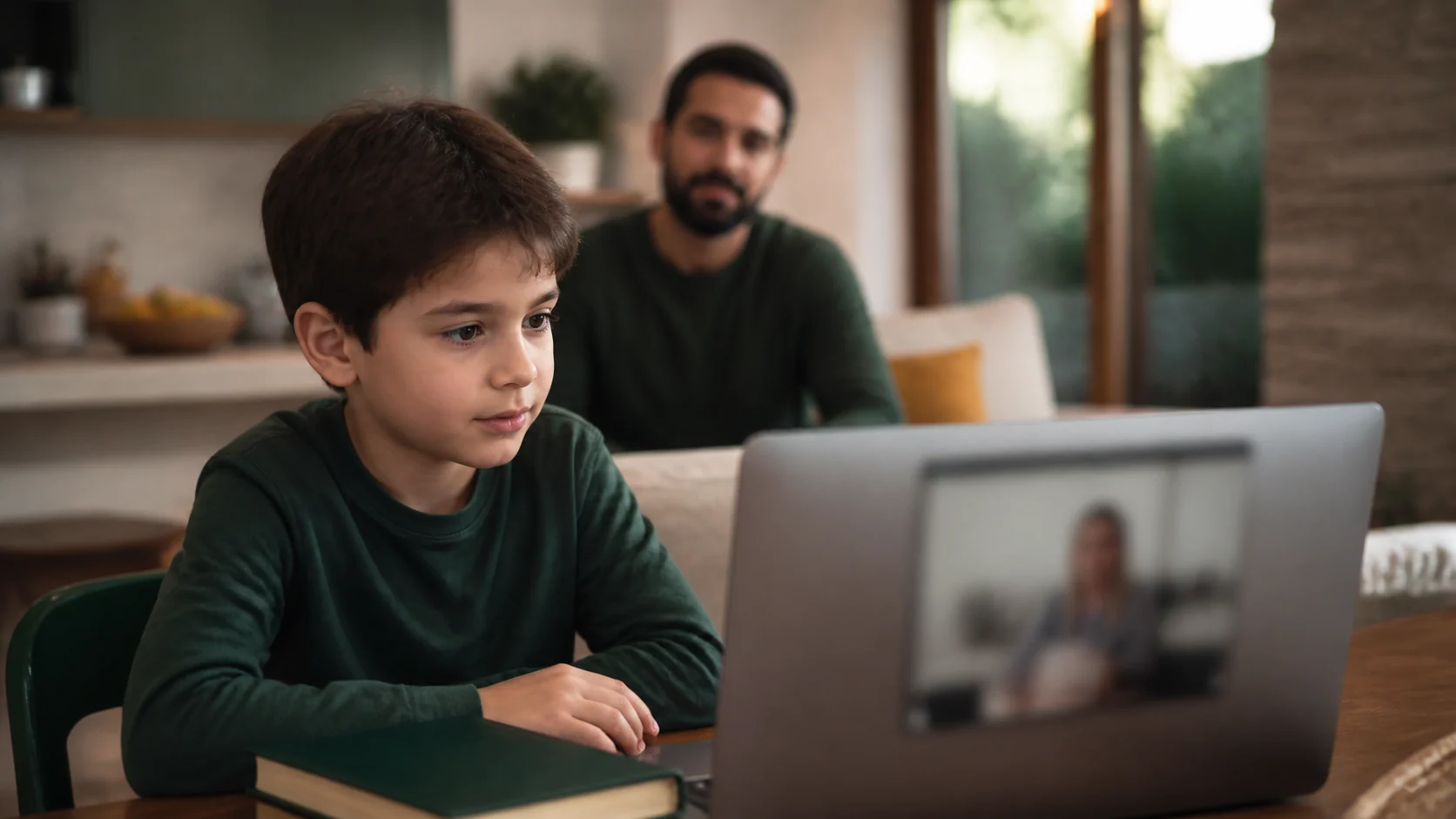
Parents make online Quran lessons possible, but they do not need to become the teacher. The most useful role changes over time: close support at the beginning, a safe and prepared environment every week, and enough distance for the child to take responsibility.
Be present for setup and safeguarding
Young children need an adult to prepare the device, open the correct link and make sure the lesson takes place in an appropriate family space. Stay within hearing distance even when you are not sitting beside the screen.
Know who the teacher is, how the academy handles communication and where concerns should be reported. Use the practical checks in our child safety guide.
Let the teacher hear the child's real level
Whispering answers or correcting every pause makes it harder for the teacher to assess the learner. A mistake is useful information inside a lesson. It shows what needs to be taught next.
If the child looks to you for every answer, redirect gently: listen to your teacher. Step in only for a technical problem, distress or something the teacher cannot see.
Support practice without reteaching the lesson
Ask the teacher what should be reviewed and for how long. Keep practice short and specific. Repeating exactly what was assigned is safer than introducing a different method or pushing ahead several pages.
If you are unsure how something should sound, do not guess. Note the question for the next lesson. The value of live teaching is that practice can return to a qualified ear.
Watch patterns, not isolated moods
One tired lesson does not prove that a child dislikes the teacher. Look across several weeks: do they settle more quickly, understand corrections and show measurable improvement?
Likewise, enjoyment alone is not enough. A warm relationship should still include real teaching. Our article on teacher fit balances emotional safety with progress.
Build independence gradually
Once the child can join safely and follow instructions, move from beside the desk to nearby. Let them remember the book, greet the teacher and explain which practice was difficult.
Independence is not a sudden handover. Continue checking reports and communicating with the teacher while allowing the learner to own more of the routine.
A monthly parent review
Check the learning environment
Is the device reliable, the space visible and the sound clear? Small technical problems can quietly reduce teaching time every week. Fix the pattern rather than accepting it as part of online learning.
Check communication
You should know what the child is working on and how to raise a concern. The teacher should also know about relevant schedule changes, learning needs or a sudden drop in confidence.
Check progress and wellbeing together
Ask what has improved and how the child feels during correction. Strong teaching needs both. Progress without emotional safety is not sustainable, and enjoyable calls without instruction are not enough.
A simple next step
Choose a routine small enough to keep, then watch one real lesson before committing. Our free trial class lets the student meet a teacher, receive a short assessment and decide afterwards. No card details are required.
Learn the Quran with a teacher by your side
Live one-to-one classes for children and adults. Your first class is free.
Book a free trial class